


You know that sinking feeling when Dr. Martinez calls at 4:47 PM on a Friday saying they can't take your emergency cases anymore? After six months of informal arrangements, scattered text messages about discounted spays, and that one time they helped with 14 cats from a hoarding case—suddenly the relationship falls apart because nobody tracked what was promised versus what actually happened.
The veterinary partnership workflow isn't about begging for free services. It's about creating structured, trackable relationships that work for both sides. Some shelters lose critical veterinary partnerships every year while others maintain decade-long relationships with multiple clinics—the difference comes down to documentation, clear expectations, and systematic tracking.
Most shelter managers approach vet partnerships backwards. They start with desperate needs ("we need someone to do emergency surgeries") instead of building sustainable frameworks that prevent those desperate moments. The shelters maintaining stable clinic partnerships aren't lucky—they're methodical about relationship management.
Why informal veterinary agreements destroy shelter operations
That handshake deal with the local clinic feels great until someone new takes over scheduling. Or the clinic's business manager questions why they're losing $1,800 monthly on discounted procedures. Or your intake coordinator sends 7 animals for "emergency" care that wasn't actually emergency-level, burning through your quarterly allocation in three weeks.
Small shelters typically lose veterinary partnerships within 8-14 months. Not because clinics don't want to help, but because informal arrangements create operational chaos on both sides. The clinic can't forecast capacity. Your shelter can't budget accurately. Nobody knows if that 30% discount applies to medications or just procedures. Staff on both sides make different promises to different people.
Riverside County Shelter had what seemed like solid relationships with three local clinics. Verbal agreements for discounted care, occasional pro-bono surgeries, emergency support. Eighteen months later, only one clinic still accepts their animals, and only for full-price spay/neuters scheduled weeks out.
The breakdown? No written agreements. No tracking system. No clear protocols for what qualified as "emergency" versus "urgent" versus "routine." When the original contact person at each clinic moved on, the relationships evaporated because nothing was documented.
Good intentions aren't enough. Clinics are businesses with overhead, staff to pay, and schedules to maintain. Treating them like charity dispensers instead of operational partners guarantees relationship failure.
The MOU framework that gets clinics to say yes
Memorandums of Understanding sound corporate, but for shelter-clinic partnerships, they're relationship insurance. The right MOU structure makes clinics more likely to partner, not less, because it removes their biggest fear: unlimited, undefined commitment.
Streamline your shelter operations effortlessly.
Animlly helps you manage every pet, volunteer, and adoption step with ease and accuracy.
- Comprehensive pet profiles
- Volunteer scheduling & communication
- Adoption tracking & reporting
No credit card required
Start with scope limitations. Not "we need help with everything" but specific, measurable commitments. Four emergency surgeries monthly. Twenty discounted spays/neuters. Two hours of on-call consultation for unusual medical cases. Clinics can plan around concrete numbers. They can't plan around "whenever we need help."
Your MOU needs five core sections, written in plain language:
Service Definitions
-
Emergency care
life-threatening conditions requiring intervention within 4 hours
-
Urgent care
conditions requiring treatment within 48 hours
-
Routine procedures
scheduled spays/neuters, dental cleanings, vaccinations
-
Consultation
phone/email medical guidance without physical examination
Capacity Commitments
-
Maximum monthly cases by category
-
Scheduling requirements (2 weeks for routine, same-day for emergency)
-
Holiday/weekend availability specifications
-
Annual review dates for capacity adjustments
Financial Arrangements
-
Specific discount percentages by service type
-
Payment terms (Net-30, immediate, monthly billing)
-
What's included (procedure, medications, follow-up)
-
Annual maximum shelter liability
Operational Protocols
-
How to request services (designated contacts, communication methods)
-
Required documentation for each animal
-
Medical record sharing procedures
-
Staff authorization levels for different request types
Relationship Management
-
Quarterly review meetings
-
Dispute resolution process
-
60-day termination notice requirement
-
Partnership recognition opportunities
When drafting capacity commitments, include an initial 3-month trial period so clinics can evaluate actual impact before long-term commitments.
The MOU isn't about locking clinics into unfavorable deals. It's about creating predictable, manageable partnerships. When Valley Veterinary reviewed our template, their first response wasn't pushback on commitment levels—it was relief that someone finally defined what "emergency" meant.
Outreach scripts that convert cold clinics to warm partners
Cold outreach to veterinary clinics fails when it sounds like donation requests. These businesses get constant asks for free services, discounted medications, and charity cases. Your outreach needs to position partnership as operationally beneficial for them too.
"Dr. [Name], I'm reaching out because [Shelter Name] is restructuring how we work with veterinary partners, and [Clinic Name]'s reputation for [specific strength—exotic animal care, emergency surgery, etc.] makes you an ideal fit for our new partnership model. We're moving away from ad-hoc requests to structured partnerships with predictable monthly volumes and guaranteed payment terms. Our partnerships include:"
-
Predictable monthly case volumes (not random emergency dumps)
-
48-hour scheduling notice for 90% of cases
-
Consolidated monthly billing with Net-30 payment
-
Annual partnership recognition in our 2,400-member supporter network
-
Structured referral tracking that documents your community impact
Would you have 20 minutes next week to discuss how a formal partnership might work for both organizations? We're looking for 2-3 clinic partners who can handle [specific number] procedures monthly at [specific discount rate], with all operational protocols documented upfront. I'm available [specific times] or happy to work around your schedule."
This doesn't beg, guilt, or promise vague "exposure." It positions partnership as a business arrangement with operational benefits. Clinics know exactly what they're considering before they respond.
The follow-up phone script for interested clinics:
"Hi Dr. [Name], thanks for considering a partnership with [Shelter]. Before we dive into specifics, I wanted to understand your clinic's situation—are there particular times of year when you have more capacity? Or specific procedures where you'd welcome more volume?" [Listen to their operational reality]
"That's helpful context. What we've found works best is starting small—maybe 4-5 procedures monthly—with clear protocols so your staff always knows what to expect from us. We handle all the scheduling coordination on our end, batch cases when possible, and maintain detailed tracking so you can see exactly how the partnership impacts your practice. Would it make sense to start with a 3-month trial partnership and adjust from there?" This acknowledges their expertise, respects their business needs, and proposes manageable commitment levels. You're not asking for charity—you're proposing structured collaboration.
Tracking templates that prove partnership value
Clinics terminate partnerships when they can't see the value they're providing. That quarterly report showing "Dr. Johnson's clinic saved 47 animal lives this quarter" carries more weight than any thank-you card. Most shelters track nothing beyond basic invoices, missing the opportunity to demonstrate tangible impact.
Build your tracking system around three core metrics:
Service Utilization Tracking
| Month | Emergency Cases | Routine Procedures | Consultations | Total Discount Value | Payment Status |
|---|---|---|---|---|---|
| January | 3 | 18 | 7 | $2,847 | Paid 1/28 |
| February | 1 | 22 | 4 | $3,190 | Paid 2/25 |
| March | 5 | 15 | 9 | $2,403 | Pending |
Outcome Documentation
Track not just procedures but results. "Performed 22 spay/neuters" becomes "Prevented approximately 374 unwanted births based on average litter sizes." "Treated 5 emergency cases" becomes "Saved 5 animals who would have been euthanized without immediate care."
Partnership Recognition Log
-
Social media posts with reach numbers
-
Newsletter mentions with subscriber counts
-
Adoption event announcements crediting veterinary partners
-
Annual report features
-
Local media coverage mentioning the partnership
When Northside Animal Haven showed their clinic partners a quarterly report documenting $31,000 in provided services, 1,847 prevented births, and 14 social media posts reaching 8,900 people, partnership renewals became automatic. The clinics could justify the discounts to their business managers and feel pride in measurable community impact.
Realistic scheduling protocols that respect clinic operations
The fastest way to burn veterinary partnerships? Send "emergencies" during their surgery blocks. Schedule routine procedures for their busiest days. Have different staff members calling with conflicting requests.
Clinics need predictable, organized interaction with your shelter, not chaos that disrupts their paying customers.
True Emergencies (same-day required)
-
Single designated contact person with backup
-
Call first, email confirmation within 30 minutes
-
Pre-authorized for immediate transport
-
Estimated arrival time provided upfront
Urgent Cases (24-48 hour window)
-
Email with photos and basic vitals
-
Proposed treatment window options
-
Confirmation required before transport
-
Alternative clinic contact if unavailable
Routine Procedures (5-14 day scheduling)
-
Monthly batch scheduling when possible
-
Submitted by 15th of prior month
-
Flexible on specific dates within window
-
Cancellation notice 48 hours minimum
Consistency matters most. When Dr. Peterson knows that emergency calls only come from Sarah or Miguel, that routine procedures are batched for Tuesday afternoons, and that your shelter never shows up with unannounced cases, the partnership becomes sustainable.
-
Staff identifies animal needing veterinary care
-
Checks partnership tracking dashboard for monthly capacity remaining
-
Determines urgency level using standardized criteria
-
Contacts clinic using appropriate protocol for that tier
-
Logs request in tracking system immediately
-
Receives confirmation with appointment details
-
Prepares animal records and transportation
-
Updates outcome tracking post-appointment
This isn't bureaucracy—it's respect for your veterinary partners' operations. Clinics that know exactly how your shelter will interact with them are far more willing to maintain long-term partnerships.
Converting one-off help into sustained partnerships
That clinic that helped with emergency surgery last month? They're partnership material, but only if you move fast and structure the relationship before they get overwhelmed.
Most shelters make the mistake of immediately asking for more help. Instead, document and recognize what they've already done, then propose structure that prevents overwhelming them.
The conversion process starts with acknowledgment. Send a formal thank-you that includes specific impact: "Bella's emergency surgery saved her life and led to adoption by a family with two kids who'd been waiting 6 months for the right dog." Include a photo. Make it real, not generic.
Then propose structure that protects them: "We were incredibly grateful for your help with Bella. I know emergency requests can be disruptive to your schedule. Would you be open to a structured partnership where we could schedule 2-3 cases monthly in advance, with clear protocols so these never conflict with your regular operations?"
The psychological shift matters. You're not asking for more charity—you're offering to organize the relationship so it works better for them. Clinics that did one-off favors often become steady partners when they realize structure means less disruption, not more commitment.
Track these conversions carefully. Note what worked, what concerns they raised, how long it took from first help to formal partnership. If clinics consistently worry about payment delays, address that upfront in new conversations. If they're concerned about case complexity, propose starting with simple spays/neuters only.
When partnerships fail: exit protocols that preserve future options
Not every partnership works out. Maybe the clinic's ownership changed. Maybe your shelter's needs shifted. Maybe the financial arrangement became unsustainable.
How you end partnerships determines whether you can ever restart them—and whether other clinics in the community will consider working with you.
Build exit protocols into your initial MOU. Sixty-day notice requirements. Final report of services provided. Outstanding balance resolution. Return of any loaned equipment. These aren't pessimistic—they're professional. Clinics appreciate knowing there's a clean exit path if needed.
When partnerships do end, conduct exit interviews. Not accusatory "why are you abandoning us" conversations, but genuine operational learning: "What could we have done differently to make this partnership more sustainable?" Often you'll discover fixable problems—communication breakdowns, scheduling conflicts, payment processing issues—that inform future partnership structures.
Document everything. That clinic that ended partnership in 2019 might have new management in 2023. If you maintained professional closure, documented their contributions, and stayed respectful, doors reopen. If you burned bridges with guilt-trips and public complaints, they're closed forever.
Building your complete veterinary partnership workflow
Stop treating veterinary care as a crisis-driven scramble for charity. Start building systematic, documented, mutually beneficial partnerships that survive staff changes, funding shifts, and organizational growth.
Your complete workflow needs clear outreach scripts that position partnership as operational collaboration. MOUs that define scope, capacity, and expectations. Tracking systems that prove value to both organizations. Scheduling protocols that respect clinic operations. Recognition programs that make partnerships visible. Exit protocols that preserve future opportunities.
This structure seems like overhead when you're desperate for immediate veterinary help. But shelters using systematic partnership workflows maintain stable clinic relationships while others burn through partnership after partnership. The upfront investment in documentation and process pays off in sustained veterinary support that doesn't depend on personal relationships or charity.
Visualize the workflow below.
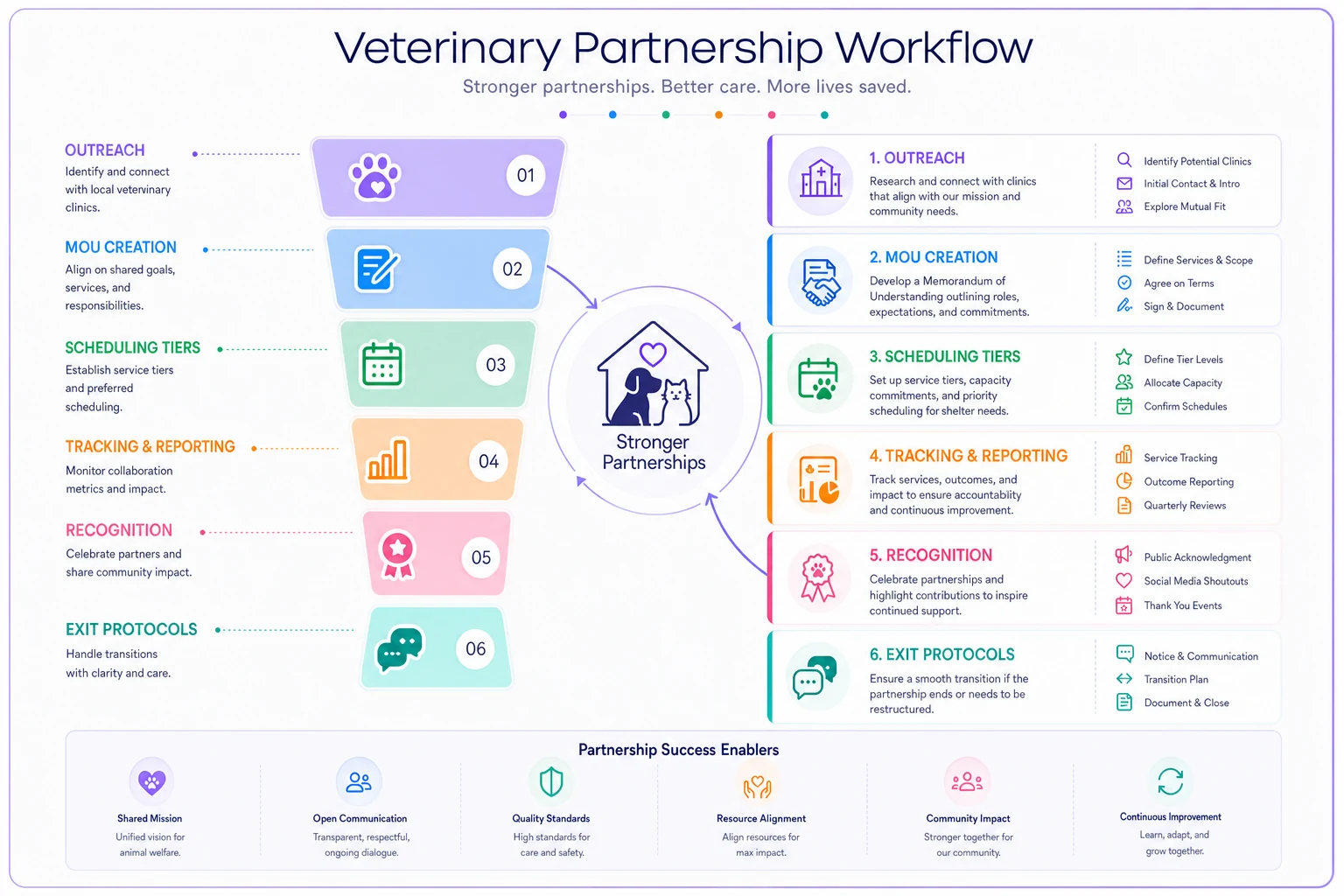
This diagram maps outreach to MOU creation to scheduling and tracking, then recognition and exit steps so both sides see how responsibilities flow.
Modern shelter management platforms with AI automation make this workflow manageable even for small teams. Automated tracking of service utilization, AI-assisted scheduling that respects clinic preferences, intelligent alerts when you're approaching monthly capacity limits—these tools transform partnership management from manual spreadsheet work into systematic operational process.
But whether you're using advanced software or basic templates, the core requirement remains: treat veterinary partnerships as operational relationships that need structure, documentation, and active management. The shelters thriving despite resource constraints aren't the ones with the biggest donation base or the most volunteer veterinarians. They're the ones who turned veterinary partnership from irregular charity into predictable operational workflow.
Ready to enhance your shelter’s impact?
Join 500+ shelters using Animlly to improve care coordination, increase adoptions, and engage communities effectively.